
Philadelphia 72-Hour Feed Is Absent
No official Philadelphia Department of Prisons, Philadelphia Sheriff, or City page publishes a named 72-hour release product. PDP operates the local jail system, so calling the current tool a sheriff release roster would be inaccurate. The PDP locator is meant to find a person who is now in a PDP-managed facility. Its official instructions require a full name with date of birth or a PID. They do not offer former-person history, a release date, a release reason, a photo, or a stated retention period.
There is also no official person-level 48-hour feed between the same-day and three-day windows. The lack of these products means no one can browse an authoritative list of every Philadelphia County jail discharge over a weekend. A search must be tied to a known person or made as a defined records request. Anonymous names collected from news or commercial sites would not become a PDP release list and could be stale or wrong.
Build a Philadelphia Three-Day Release Check
A three-day review works best as a timeline. Start with the person's exact identity and the beginning and end of the period. Keep the time of each lookup. This approach can show a change between two current-custody checks, then use an event or record to explain it. It cannot enumerate unknown people because none of the public systems supplies the missing named feed.
- Search PDP for current city jail placement by full name and date of birth, or PID.
- Search the Pennsylvania VINELink portal for the correct person and note any custody event and location.
- Check both applicable Philadelphia court tiers in UJS for bail, disposition, sentencing, or transfer entries during the period.
- Search PA DOC, BOP, or ICE when a receiving authority may have taken custody.
- Request existing PDP discharge records for the exact person or bounded interval when an official answer is required.
City locator staff can assist with present PDP placement at 215-685-8394, 215-685-8395, or 215-685-8396 around the clock, with Spanish service at 215-685-8692. An operator can address present local custody. A written Right-to-Know Law request is the better route for historic discharge fields. Neither channel should be asked to invent a three-day report that the agency does not maintain.
Note: Date each source result so the Philadelphia County custody sequence remains clear across the full three-day window.
Philadelphia 72-Hour Release Fields
Because no public rolling feed exists, the table describes evidence available across official sources, not columns on a Philadelphia County release page. The most reliable reconstruction joins the identity and physical discharge fields from PDP with the legal basis shown on a court docket.
| Field or evidence | What it shows |
|---|---|
| Name, DOB, PID, commitment ID | Links records to the same person and local custody episode. |
| PDP current facility | Shows present placement in the city jail system at the check time. |
| PA SAVIN status or event | May show release, movement, escape, transfer, or parole in a participating system. |
| UJS bail, disposition, or sentence entry | Explains the court event that may authorize or affect release. |
| PDP discharge date and time | Documents when the agency recorded physical discharge. |
| Discharge type or destination | Distinguishes return to the community from transfer or continued custody. |
The official public systems do not promise that every one of these items will appear online. PDP must determine whether a requested field exists and is releasable. Exempt or protected material may be withheld or redacted. A court order also does not prove the minute when discharge work ended.
Philadelphia Weekend Release Reconstruction
The three-day window is useful when events straddle days. Bail may post, a court order may appear, and staff may then review other holds, complete records, return property, and arrange physical exit. Holiday office closures can also delay when a historical record is available, even if custody processing continues. Philadelphia publishes no special weekend roster and no guarantee that an event will surface in a public tool by a fixed deadline.
A good timeline keeps unlike dates separate: the court-entry time, bail-posting time, notification event, last positive PDP locator check, first negative check, receiving-system result, and recorded discharge time. They can differ without one source being false. For a narrow same-day pickup question, consult the Philadelphia County 24-Hour Release List, which explains the City's published nighttime bail procedure.
The official PDP current-custody form provides useful context:
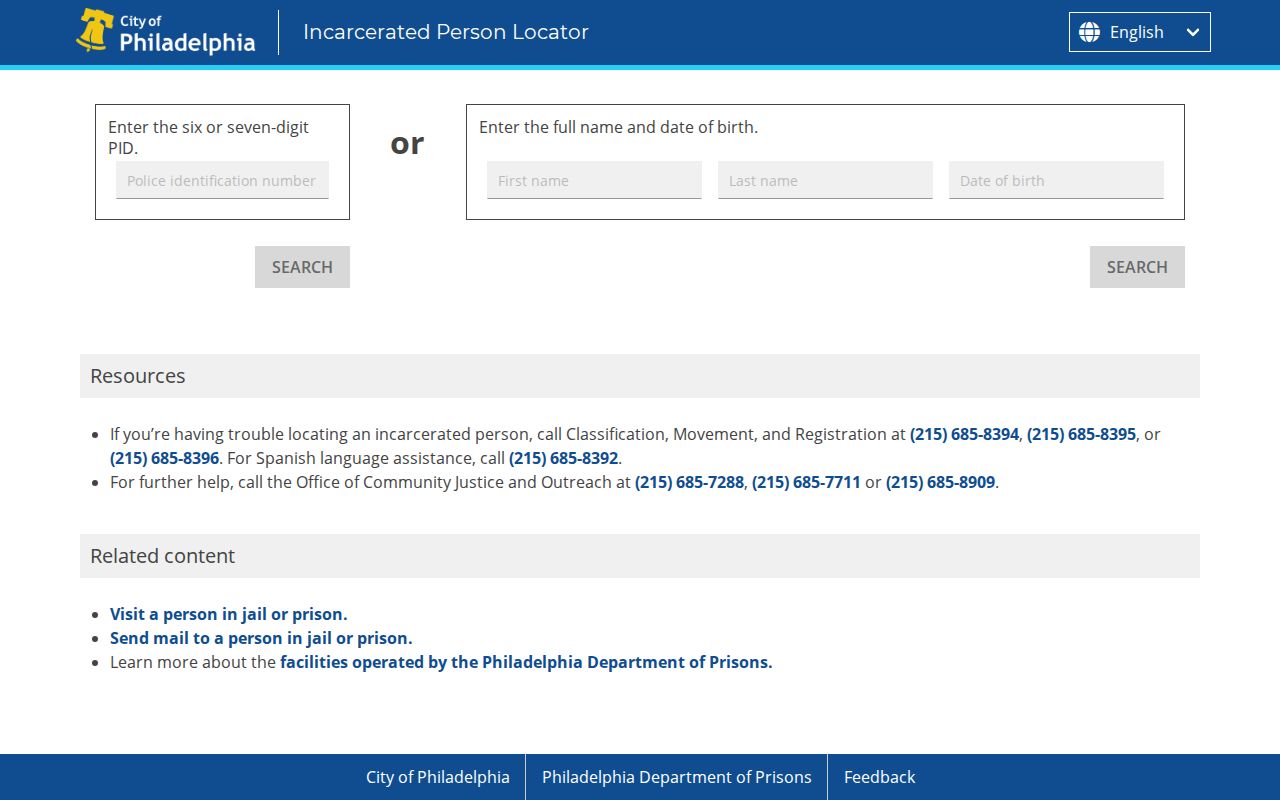
This form can establish current PDP placement, but it cannot return a list of former occupants from the prior three days.
Philadelphia Release Data Quirks
Philadelphia's four adult jail facilities are clustered on State Road but share one PDP locator. A person can move from CFCF to DC, PICC, RCF, or an associated unit without leaving the city jail system. The daily census also separates people physically present from workers, furloughs, open-ward hospital patients, emergency trips, and people still under PDP responsibility while held in another jurisdiction. Those categories show why a building absence or a single locator miss cannot be equated with release.
The PDP daily headcount and census supplies aggregate counts by facility and category. It does not name people, show release reasons, or count all releases in a chosen 72-hour span. Monthly population snapshots also provide point-in-time and length-of-stay context, but a drop between reports cannot be converted into a release total.
The official PDP census image makes the boundary visible:
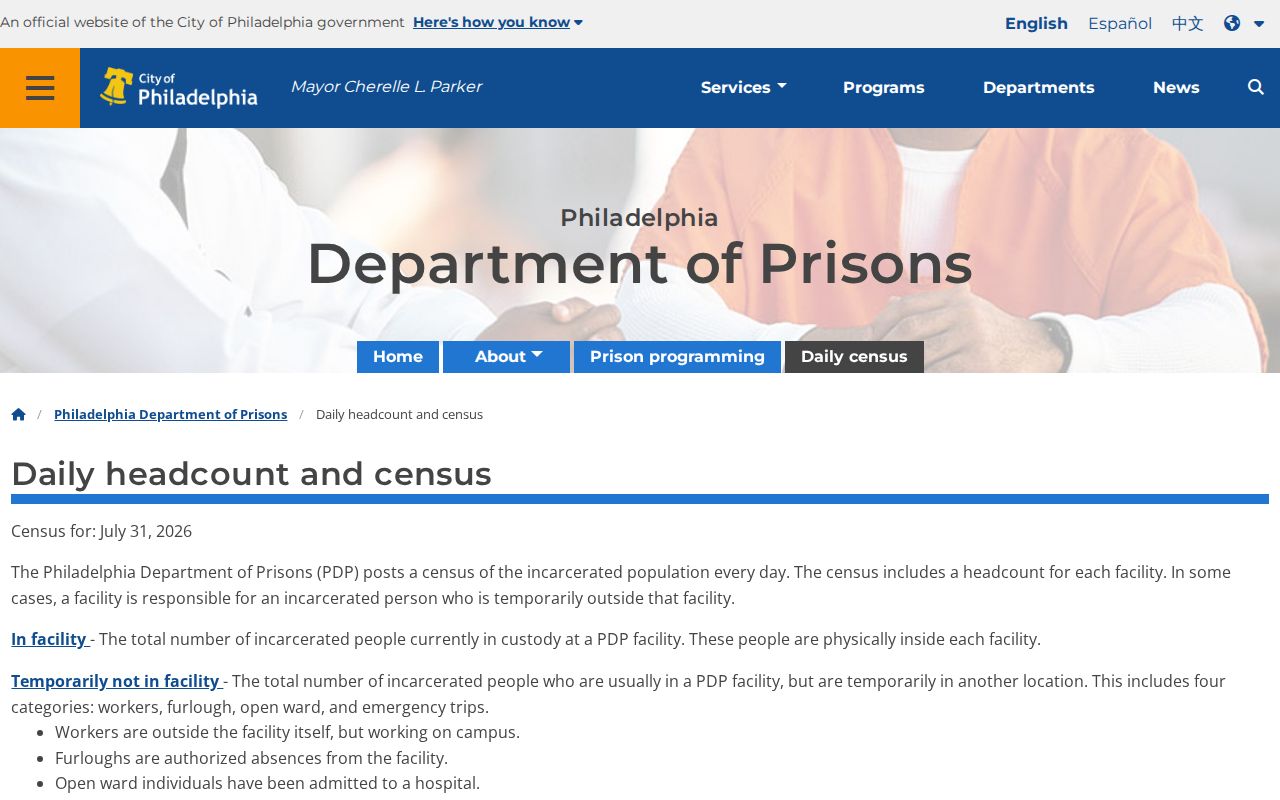
It is a system-wide population aid, not a substitute for person-level Philadelphia County discharge records.
Note: Aggregate headcount changes cannot identify who left Philadelphia County custody or where any one person went.
Philadelphia Court Records Across 72 Hours
The UJS Case Information portal preserves public docket activity after a short jail stay has ended. Philadelphia has both the Court of Common Pleas and Philadelphia Municipal Court. The Municipal Court is not a Magisterial District Court, so selecting the wrong court type can create a false no-result. Review the appropriate Philadelphia tiers when the case level is unclear.
Bail status, dismissal, withdrawal, sentence, probation, and later revocation entries can explain why detention ended or continued. Yet the docket is a legal record, not a jail turnstile log. An order can precede physical release. Another docket, detainer, or receiving authority can also keep the person in custody. Sealed, expunged, and Clean Slate limited-access cases do not appear in public Case Search, so public absence may reflect an access rule rather than a missing case.
The official UJS portal shows the Philadelphia court-search route:
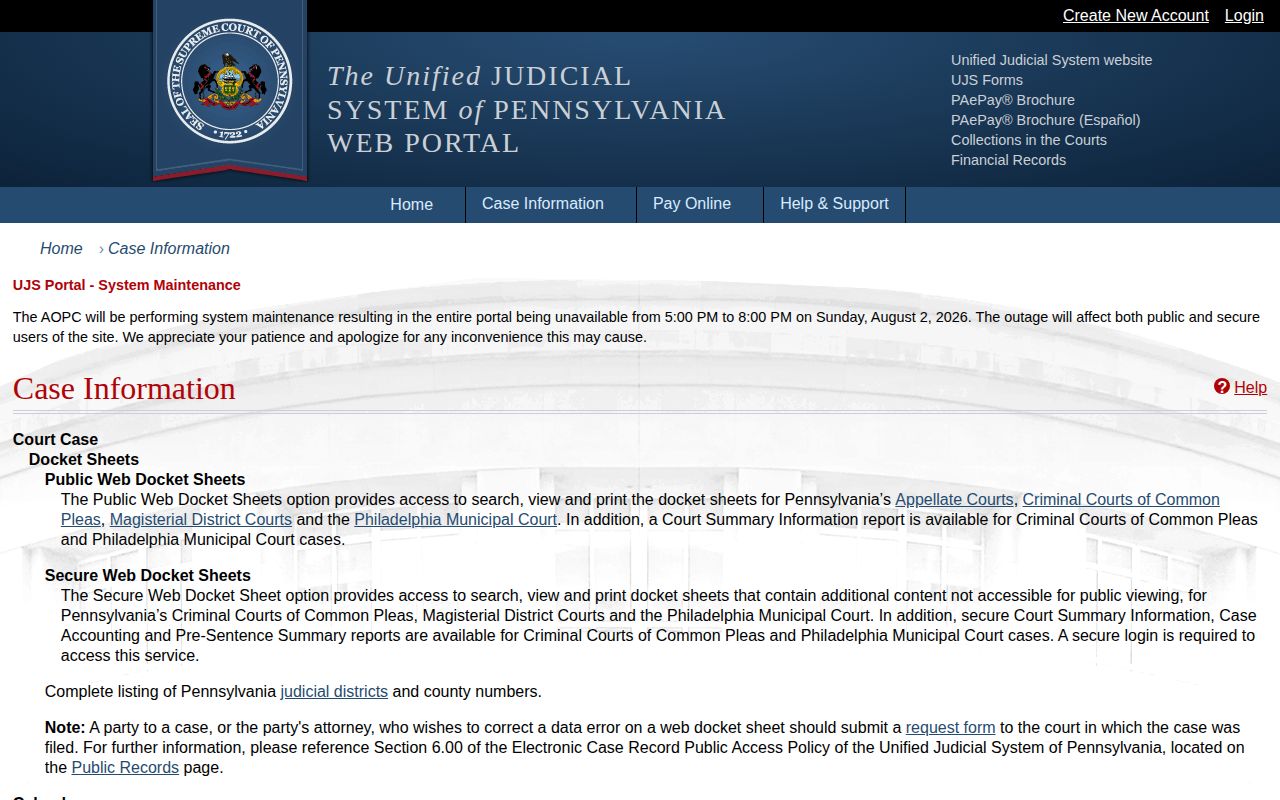
Match the docket to the person, then read the latest entries alongside custody and notification results.
Philadelphia Release Versus Transfer
A PDP departure has several possible destinations. Community discharge is only one. A state-sentenced person may enter the Pennsylvania Department of Corrections anywhere in the state. A federal defendant may move to BOP or USMS custody. An immigration matter may lead to ICE civil custody. A person may also move to another county, a hospital, or another authority.
| Result | Correct next source | Meaning |
|---|---|---|
| Still listed in PDP | PDP locator | Present local custody or placement. |
| Found in PA DOC | PA DOC locator | State custody or parole history, not a PDP roster entry. |
| Found in BOP or ICE | Relevant federal locator | Federal or civil immigration custody continues. |
| Out of Custody alert | PA SAVIN plus docket | Departure from the listed system, subject to cross-check. |
| PDP discharge to community | PDP record plus docket | Physical local discharge with its legal context. |
A PA DOC supervised-person result with a release date can show state institutional release to parole. It does not describe an ordinary PDP-only case. BOP's “Not in BOP Custody” wording also permits other custody or supervision. Each result must stay within the system that produced it.
Request Philadelphia Three-Day Discharge Records
The Philadelphia Open Records Policy identifies the written Right-to-Know Law route. Submit the statewide form to the PDP open-records officer with requester contact information and a sufficiently specific description. A useful interval request asks for existing records sufficient to identify discharges between exact timestamps, including discharge date, time, and type, with exempt fields redacted. PDP decides whether such a releasable record is maintained. The law does not require creation of a new rolling list.
For one person, add the full name, DOB, PID if known, facility, commitment date range, and court docket number. Ask for the admission and discharge data tied to that episode. The City ordinarily responds in good faith within five business days, though a lawful extension may apply. Current duplication or certification charges follow the state fee schedule.
That process is slower than a public feed would be, but it is the proper route to an official historical answer. For a named-person search that reaches farther back than three days, use the main Philadelphia County release search and records coverage rather than treating 72 hours as an archival limit.