
DC Release and Transfer Paths
The Detention Center at 8201 State Road is part of Philadelphia’s local prison system. Community release can follow posted bail, release on recognizance, sentence completion, dismissal, or another court order. A departure may instead lead to CFCF, PICC, RCF, a hospital, another county, PA DOC, federal custody, or civil immigration custody. Those movements continue confinement or agency control and should not be called community release.
DC’s medical role makes this distinction especially important. Official PDP census categories separate a person physically inside a facility from someone temporarily away for an open-ward hospital stay or emergency trip. PDP may remain responsible during that absence. The census also counts people held in other jurisdictions for whom PDP still has responsibility. A building-level absence does not settle legal status.
| Possible DC departure | Release? | Best confirmation |
|---|---|---|
| Community after bail or order | Potentially yes | SAVIN event, docket, PDP discharge data |
| Another PDP facility | No | Citywide PDP locator |
| Hospital or emergency trip | Not by itself | PDP current-location help |
| PA DOC or another authority | No community return | Receiving-system locator and docket |
Verify a DC Release
Use the PDP incarcerated-person locator instructions first. The search calls for a full name and date of birth or a Philadelphia PID. A positive result can identify a current PDP facility. It may show that the person simply moved from DC to another building. The official service does not promise a former-person archive, release date, reason, or rolling recent-release list.
A reliable check follows the custody trail:
- Gather the full name, birth date, PID, docket number, and approximate commitment date.
- Search PDP and record the result and time of the check.
- Review PA SAVIN through VINELink for release, transfer, and location events.
- Read the UJS docket for the bail, dismissal, sentence, or order that may explain the change.
- Search PA DOC, BOP, or ICE when the facts suggest another agency took custody.
- Request the DC commitment and discharge record when exact status or timing matters.
A no-result should be phrased as “not shown in PDP at the time checked.” Misspelled identity data, processing, a temporary medical absence, placement outside PDP, transfer, or actual discharge can all produce uncertainty. For telephone help available around the clock, PDP lists 215-685-8394, 215-685-8395, and 215-685-8396. Spanish service is at 215-685-8692.
The full Philadelphia County release-record route explains how to align local jail, court, state, federal, and notification records without treating one no-hit as proof.
Request DC Release Records
For an exact physical discharge date, time, status, or destination, ask PDP for existing commitment and discharge information. Philadelphia applies Pennsylvania’s Right-to-Know Law through its open-records policy. The request must be written, directed to the right officer, and submitted on or with the statewide Office of Open Records form. Anonymous or oral questions do not qualify as formal City RTKL requests.
PDP Agency Open Records Officer
Gregory J. Vrato, Esq.
7901 State Road
Philadelphia, PA 19136
215-685-7840
Greg.Vrato@prisons.phila.gov
Name the person, DOB, PID if known, Detention Center, docket number, and a narrow commitment period. Ask for admission or commitment date and time, facility assignments, discharge date and time, discharge status or type, destination, and releasable hold disposition. Electronic copies can reduce handling. Invite redaction of exempt details instead of requesting medical, security, juvenile, victim, or sealed information.
The City open-records policy describes an ordinary five-business-day good-faith response. The response may be final or interim. Statutory reasons can permit an extension of up to 30 calendar days, and more time requires written agreement. Current duplication and certification fees may apply. The law does not require PDP to create a new report or answer a narrative question that no record answers.
Denial is possible when an exemption, privilege, security concern, court restriction, or another law applies. A denial should carry appeal instructions. Note: A narrow request tied to one commitment gives PDP a clearer record search than a request for every past DC release.
DC Facility Facts and Contact
The Detention Center is at 8201 State Road, Philadelphia, PA 19136. Its official telephone number is 215-685-8436. The PDP facilities page says DC opened in 1963. It formerly served as the male intake center and now includes four dormitories, three cellblocks, a medical unit, and a 99-bed Prison Health Services Wing.
These are facility facts, not release totals. The Detention Center has no separate public roster or recent-release feed. The facility telephone can assist with navigation, while the central locator desk is the better route for present placement across PDP. Historic discharge facts belong in a written records request. Court staff, SAVIN, and receiving agencies answer different parts of the custody question.
The official PDP source below identifies DC and the other active adult facilities.
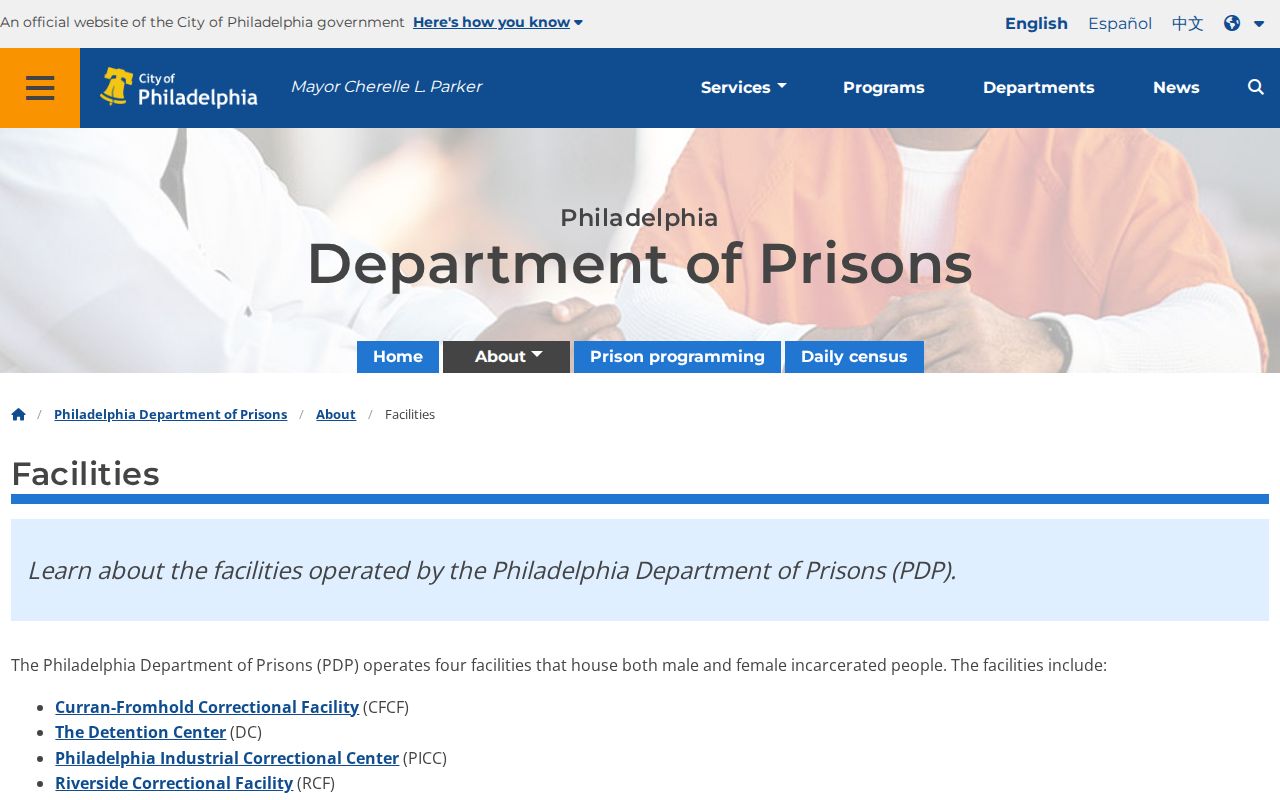
Because all four buildings appear under one operator, an updated facility name can indicate reassignment rather than release.
DC Medical Status Is Not Release
DC’s medical unit and health-services wing give its page a distinct verification concern. A person may be away from the building for care without being free from PDP responsibility. Philadelphia’s daily census expressly tracks open-ward hospital patients and emergency trips among temporary absences. The right question is not merely whether someone is physically at DC. Ask whether the person remains in PDP custody or responsibility.
Protected health details may not be disclosed to a caller. A locator operator can be asked about current PDP placement, but should not be asked to speculate about medical facts or legal status. If the person no longer appears, compare the court docket and SAVIN event, then look for a receiving agency. A discharge record may state a releasable status or destination without exposing private medical information.
- Temporary absence
- Time outside the building while PDP responsibility may continue.
- Discharge
- End of a PDP commitment, whether to the community or another authority.
- Transfer
- Movement between facilities or systems while custody continues.
- Detainer
- A hold or request that may lead another agency to accept custody.
DC State Road Release Checks
Philadelphia currently operates CFCF, DC, PICC, and RCF along the State Road campus. Historic Philadelphia prisons are not active choices. RCF has an intake and discharge area, but that does not mean every person leaving DC is discharged through RCF or that all PDP releases use one fixed exit. Housing and operational routes can change.
For a pickup, call PDP before traveling. Philadelphia’s published nighttime bail procedure describes the SEPTA stop across from the prison campus as the pickup point and asks the pickup person to arrive no later than two hours after bail is posted. That is an arrival instruction, not a two-hour release guarantee. Release processing, hold checks, property return, and physical exit can take place after the court or bail event.
The State Road layout explains why a citywide search matters. If PDP now lists CFCF, PICC, or RCF, the DC departure was an internal move. If no PDP placement appears, continue to SAVIN, UJS, PA DOC, BOP, and ICE as the facts warrant. Only then seek the discharge record for the exact local custody endpoint.
Interpret DC Release Evidence
Evidence has levels. A docket order establishes legal authority but not the physical exit time. A PA SAVIN out-of-custody event is direct event evidence from a participating feed, though another agency could take custody at once. A PA DOC or BOP hit means the person moved into or remains tied to another corrections system. A PDP discharge timestamp answers the local-jail timing question most directly.
Do not use the aggregate daily census as a named release list. Its value is different. It shows why census location and legal custody can diverge. Philadelphia also publishes monthly population snapshots, but a change in headcount cannot identify who left or why. Individual confirmation still depends on person-level records.
When sources conflict, check identifiers and update times. Similar names can create a false match. The most sound conclusion names the system and scope, such as “not shown in PDP, with a SAVIN transfer event,” instead of turning an uncertain clue into a broad claim of release.