
FDC Philadelphia Release Paths
Federal Detention Center Philadelphia holds people in federal court custody and people moving through the federal system. The Bureau of Prisons operates it at 700 Arch Street. A departure can follow release ordered by a federal judge, sentence completion, transfer to another BOP institution, movement under the U.S. Marshals Service, or a handoff to ICE. Those outcomes do not carry the same meaning. Only a confirmed exit without another custodial agency supports return to the community.
The BOP Inmate Locator is the first public custody check. Its result must be read as a whole. A past release date and a location of “Released” establishes departure from BOP custody on that displayed date. “Not in BOP Custody” says only that BOP does not currently hold the person. BOP warns that another justice agency may still hold the person or that federal supervision may continue.
Confirm FDC Philadelphia Release
Match the person before interpreting a federal result. A BOP register number is the strongest public search key. The locator also accepts DCDC, FBI, or INS numbers. A name search allows optional age, race, and sex filters, which can separate people with similar names. The public result can show the name, register number, age, race, sex, release date, and location.
Use the federal release sequence in this order:
- Search by a known federal number; otherwise use the full name and careful demographic matching.
- Read the release date and location together, including “Released,” “Not in BOP Custody,” or a named institution.
- Open the PACER Case Locator and review the correct federal case for detention, release, sentence, or supervised-release orders.
- When the person was held for court rather than serving a BOP sentence, confirm with the named holding institution or authorized court contact.
- If immigration custody is plausible, search ICE ODLS independently because a BOP result does not resolve ICE status.
A future BOP date is projected and can change after sentence recalculation or federal time-credit review. “UNKNOWN” means the release term is not determined in the public result. Neither label is proof of an actual exit. For federal confinement before 1982, BOP directs historical requests to the National Archives with identifying details and an approximate place and period of confinement.
The Philadelphia County released-inmate search separates local PDP, Pennsylvania state, and federal records when the original custody system is uncertain. Note: Preserve the check date because federal locations, court orders, and release calculations can change.
Read FDC Philadelphia Results
BOP and PACER answer different questions. The locator reports BOP custody and historical release data. The docket reports the court’s legal action. A release order can exist before physical processing ends, while a BOP departure may occur through transfer to another agency. The two sources should support, not replace, each other.
| Federal source | What it can show | Release limit |
|---|---|---|
| BOP locator | Register number, date, location, released status | Does not resolve other-agency custody |
| PACER docket | Detention, release, sentence, and supervision orders | Order time may differ from physical exit |
| Holding facility | Current placement confirmation when available | Disclosure and identity rules apply |
| ICE ODLS | Current immigration detention location when public | No result is not release proof |
The available BOP locator capture illustrates the federal search and its historical custody language.
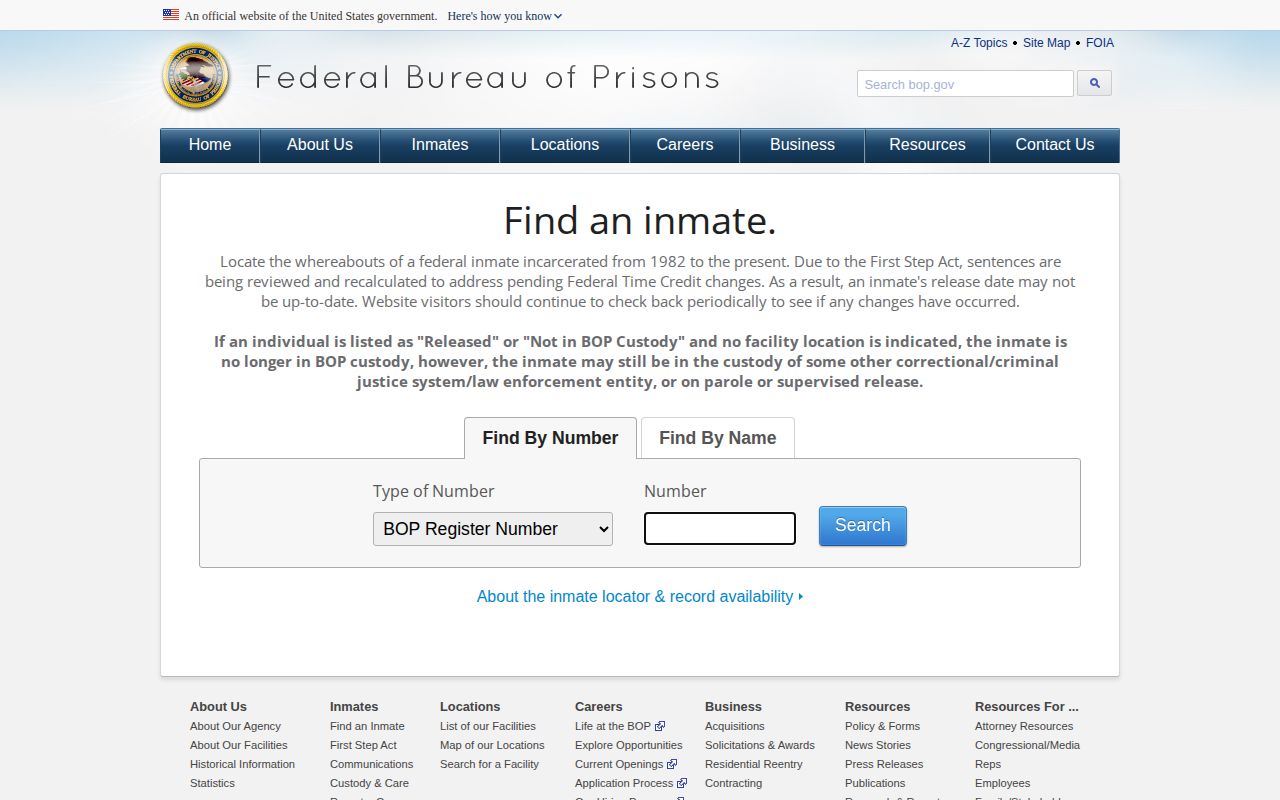
The displayed labels make the central point visible: a BOP release date describes BOP custody, not every possible federal or civil hold.
FDC Philadelphia Contact Records
The official FDC Philadelphia page controls the facility’s current identity and contact instructions. The detention center is at 700 Arch Street, Philadelphia, PA 19106. Direct questions narrowly. Facility staff may confirm only information that policy permits, and they cannot replace a court docket or create a public release history on demand.
Federal Detention Center Philadelphia
700 Arch Street
Philadelphia, PA 19106
Federal Bureau of Prisons facility
Confirm current telephone and visiting details on the official facility page.
When the precise legal basis matters, use PACER and the filing court. PACER access and copies may carry current fees. Search results and docket indexes also may not include every underlying order. For a record that is not available on the docket, follow the federal agency’s own records process and identify the person, register number, case number, requested document, and narrow date range.
The official FDC Philadelphia capture confirms the federal institution used for this Philadelphia custody route.

That federal listing should not be confused with the Philadelphia Department of Prisons facility directory, which covers a separate local custody system.
FDC Philadelphia ICE Transfers
Philadelphia’s local policy limits when City personnel honor an ICE detainer, but FDC Philadelphia is federal, not a City prison. The practical release issue is custody sequencing. If ICE takes the person after BOP custody ends, the federal criminal detention has ended while civil immigration detention continues. A BOP “Released” or “Not in BOP Custody” result does not answer the ICE question.
Search the ICE Online Detainee Locator System by exact nine-digit A-number and country of birth, adding leading zeroes when needed, or by exact first and last name, country of birth, and optional date of birth. ICE says ODLS can include some people released from its custody within the prior 60 days. After that period, an absent result says nothing reliable about an older immigration release.
When ODLS does not resolve the case, the ICE Detention Reporting and Information Line is 1-888-351-4024 and operates Monday through Friday, 8 a.m. to 8 p.m. Eastern. ICE does not publish records for people under 18 through this locator. Use immigration case records or authorized counsel for legal details beyond public custody location.
FDC Philadelphia USMS Movements
The U.S. Marshals Service transports and holds federal prisoners for court, often through BOP or contract facilities. It has no public name-search roster comparable to the BOP locator. USMS policy also withholds prisoner photographs, personal histories, and arrival or departure times. A missing BOP result can therefore reflect a person who remains in federal custody outside a searchable BOP record.
For a federal pretrial case, begin with PACER. Read detention and release orders, sentencing entries, warrants, and later supervised-release proceedings. Then contact the holding institution identified in an authorized source. Use BOP only when the person entered its searchable system. Do not treat BOP silence as evidence that the Marshals released someone.
The PACER Case Locator capture shows the court-record route used when an FDC Philadelphia movement cannot be resolved by BOP alone.
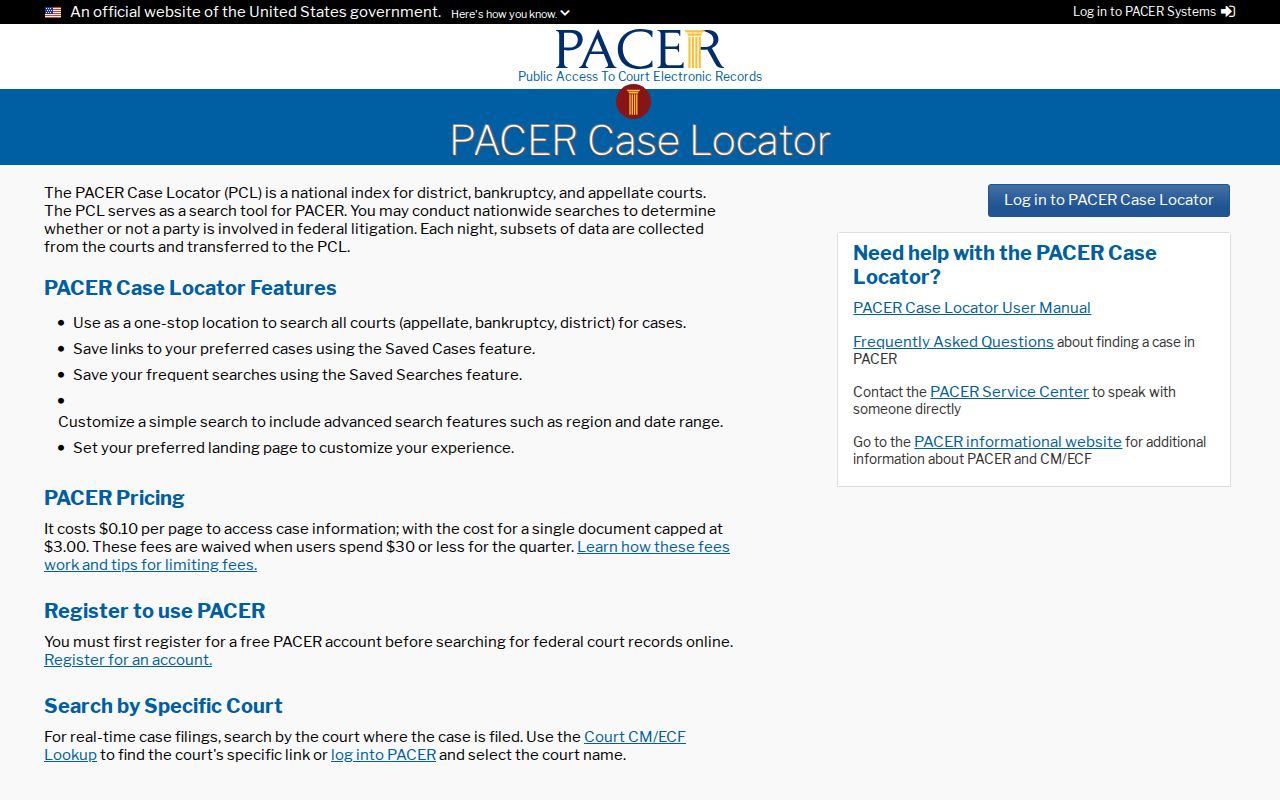
A docket can identify legal authority for release or continued detention, but the holding facility remains the source for physical custody at a given moment.
Define FDC Release Status
Federal labels are easy to overread. Keep the agency and event attached to each term. That method prevents a criminal-custody release from being mistaken for freedom from all supervision or detention.
- Released
- The person left BOP custody on the displayed date; another agency or supervision may still apply.
- Not in BOP Custody
- BOP does not currently hold the person, without stating a final destination.
- Supervised release
- Court-ordered federal supervision in the community after confinement.
- Detainer
- A request or hold that may lead to transfer to another authority.
Strong confirmation combines identity, a BOP status, the federal court’s latest order, and any receiving-system result. If those sources conflict, use the newest official record and ask the responsible agency about current custody. An unresolved outcome is more accurate than assuming a community release from one absent listing.
Release paperwork can identify terms that the locator cannot. Federal supervised release is imposed by the court and follows confinement under stated conditions. It differs from Pennsylvania parole, which belongs to the state system, and from Philadelphia probation in a local case. PACER may show later federal supervision proceedings even after the BOP date has passed. That continuing docket activity does not mean the person remained confined on the release date, but it does show why “sentence complete” and “no legal obligations” should not be treated as the same fact.
When only a name is known, compare every stable identifier before joining records. A register number belongs to the federal custody record, while the court case number belongs to the docket. An A-number belongs to immigration records. Record each separately. A match across the BOP result, PACER case, and ODLS search is far stronger than a similar spelling alone, especially when a transfer between agencies occurred near the displayed release date.