
Philadelphia Parole and Probation Compared
Parole and probation both permit a person to live in the community under conditions, but they are not interchangeable. Pennsylvania state parole is conditional release from state confinement before the maximum sentence ends. Probation is a court sentence served in the community, sometimes after a jail term and sometimes without one. Philadelphia county parole can concern a local sentence, while the Pennsylvania Parole Board makes state parole decisions.
| Point | State parole | Philadelphia probation or county parole |
|---|---|---|
| Authority | Pennsylvania Parole Board and PA DOC | Philadelphia Court of Common Pleas |
| Public evidence | PA DOC supervised-person result, final Board Action | UJS criminal docket and local court order |
| Supervision contact | PA DOC district or suboffice | Philadelphia Adult Probation and Parole |
| Release meaning | Prison release into supervision | Community supervision under a local sentence |
| End point | Discharge from state supervision | Completion or court discharge under the local order |
A missing PA DOC result does not prove that Philadelphia probation ended. PA DOC generally does not supervise ordinary county probation in Philadelphia. Conversely, a state parole record is not a PDP jail booking record.
Verify Philadelphia Post-Release Supervision
Start with the sentence source. A Philadelphia County jail release may lead to local probation, state parole, no supervision, or transfer. The UJS Case Information portal can show the controlling Philadelphia Municipal Court or Common Pleas docket. A state prison case then calls for the PA DOC Department Supervised Individual search.
- Match the person by full name, date of birth, docket number, PID, or DOC number where available.
- Read the UJS sentence and later entries to determine whether the order imposed probation or local parole.
- For state parole, search the PA DOC supervised-person mode and review release date, district, identifiers, and status.
- Confirm the assigned office with the current official district map before relying on an address.
- Request a final Board Action when a state parole grant, refusal, condition, or detainer result needs documentation.
A supervised-person release date is strong evidence that state institutional custody ended and parole began. It is not a supervision-end date. For a broad release and custody verification path, use the Philadelphia County released-inmate search before deciding which supervision branch applies.
Note: The sentence and supervising authority must agree before a Philadelphia County parole or probation status is stated.
Philadelphia State Parole Locator Fields
The PA DOC Inmate and Department Supervised Individual Locator updates daily and separates its inmate and supervised-person modes. The supervised mode supports searches by name, parole or inmate number, gender, release date, date of birth or age, residence county, and district office. A detail may show parole and inmate numbers, physical descriptors, state, release date, aliases, photo, last update, and an absconder indicator.
The official PA DOC capture shows the state search and live result labels:
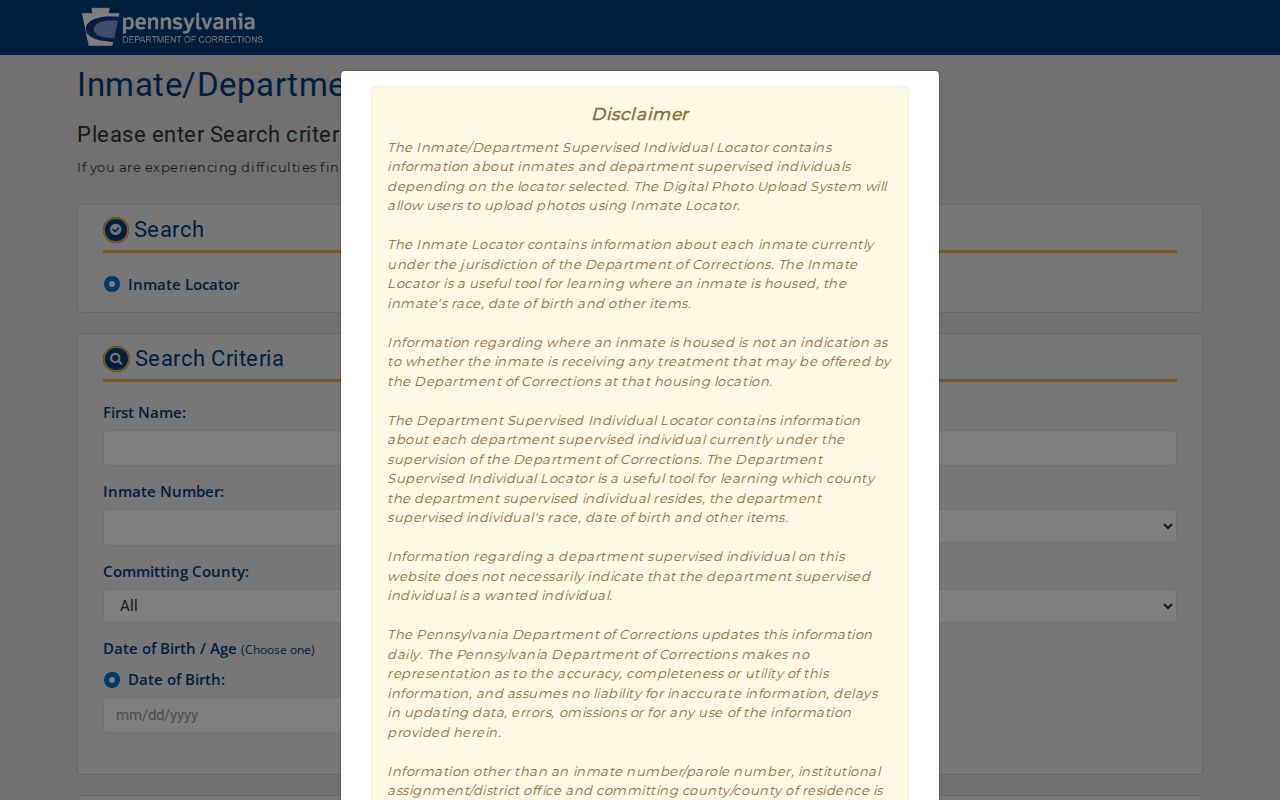
Use the last-update field and at least two identifiers. Some biographical details may be self-reported. The locator excludes county inmates, so it cannot confirm ordinary PDP custody or every Philadelphia probation case.
Philadelphia Parole District Contacts
PA DOC's current Philadelphia district map assigns state-supervised people among a district office and suboffices. Office assignments can change, so the official Philadelphia district map controls over a copied address list. Privacy rules can limit what staff disclose about another person.
Philadelphia District Office
2630 North 13th Street, Suite 100
Philadelphia, PA 19132
215-560-6594
Countywide Division
2630 North 13th Street, Suite 200
Philadelphia, PA 19132
215-560-2082
Philadelphia Adult Probation and Parole
714 Market Street, 6th Floor
Philadelphia, PA 19106
215-683-1000
Use the state offices for PA DOC parole supervision. Use the local Adult Probation and Parole contact for a Philadelphia court order. Calling the wrong branch can produce a no-result that says nothing about whether supervision exists.
Philadelphia Parole Decisions and Hearings
The Pennsylvania Parole Board does not publish a verified person-by-person future interview calendar or online individual results search. Monthly statistics summarize cases considered, grants, refusals, and parole or reparole outcomes, but they do not identify a specific person. A listed review month is not a release promise. A grant to detainer means another authority will take custody rather than release to the street.
For an individual result, request the final Board Action by full name, DOC or parole number, and approximate action date. The Board's Right-to-Know policy treats final decisions as public after the person has received a copy, subject to redaction. Grants state reasons or conditions, while refusals state reasons and later-review requirements. Revocation matters use different terms and may result in continuation or recommitment.
The official Pennsylvania parole process explains why minimum-date arrival does not guarantee release:
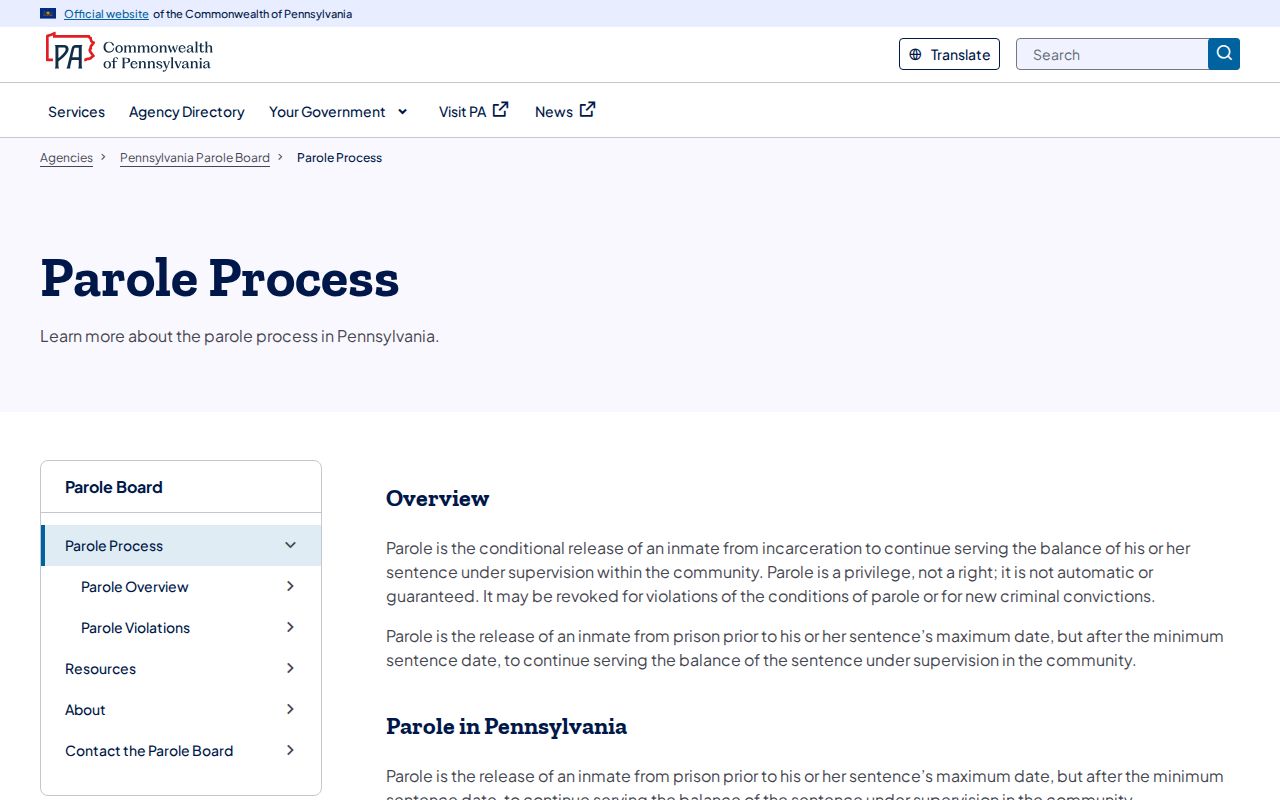
The Board generally cannot grant discretionary parole before the judicial minimum, and a later action can still depend on a plan, conditions, and holds.
Note: A Pennsylvania Board grant and a Philadelphia County physical release are separate events that may not occur together.
Philadelphia Absconder and Warrant Status
A PA DOC supervised-person record may display “Wanted: Parole Absconder.” An absconder is a person alleged to have left supervision or failed to remain available as required. The label shows prior release to supervision and a current wanted status. It does not describe a new release, prove a new conviction, or identify every warrant.
Philadelphia does not publish a verified general county release-and-absconder feed. Direct warrant facts belong with the supervising agency or court. A missed appointment, rumor, or unanswered call is not enough. Match the person, read the current official record, and obtain the relevant order or agency response when legal status matters.
- Absconder
- A supervised person reported wanted for leaving or avoiding supervision.
- Detainer
- A request or legal basis for another authority to hold or receive a person.
- Violation
- An alleged breach of a supervision condition, resolved through the proper process.
- Discharge
- The formal end of the relevant supervision term, not merely release from a facility.
Philadelphia Reentry After Supervised Release
Philadelphia's local reentry network links PDP programming, Adult Probation and Parole, and the City's Division of Reentry. PDP social workers assess needs, make referrals, and develop service or discharge plans. The Division of Reentry at 1425 Arch Street helps recently or formerly incarcerated adults navigate services. Walk-ins are listed on weekdays during posted hours, while appointments cover a wider weekday span. Confirm current access before travel.
The City also publishes a Philadelphia prisons discharge packet with organization contacts. These services help a person follow a plan and meet needs after release. They do not verify parole, probation, a warrant, or sentence completion. Status still comes from the docket, PA DOC record, Board Action, or assigned office.
Philadelphia Release Property and Identification
Philadelphia keeps several post-release administrative paths separate. The official visiting information says friends and family may collect personal effects from the cashier and that the cashier office is open around the clock at release. The Division of Reentry can help connect people with identification and legal resources.
Deposited funds use another process. The City's funds information gives a written ViaPath refund route if money is not returned, with the facility and PPN or ID included. Property pickup, an account refund, and a supervision report are different tasks. None establishes whether parole or probation has ended.
Note: Keep Philadelphia County property, funds, reentry, and supervision contacts separate so each office receives the right request.
When Philadelphia Supervision Ends
Release from jail or prison does not itself end a sentence. State parole continues until discharge or another lawful end point. Philadelphia probation continues under the court's order unless the court or supervising department records completion, modification, revocation, or discharge. A stale or missing online result cannot safely answer that question.
Use the final Board or PA DOC record for state supervision and the criminal docket or First Judicial District record for local supervision. If a projected date is the real issue, the Philadelphia County projected release date coverage separates minimum eligibility, Board action, and actual release.
Philadelphia Release Supervision Conditions
Conditions come from the controlling court or Board Action and must be read from that record. State parole begins with reporting instructions from PA DOC. The final Board Action can state conditions tied to the grant. A Philadelphia probation order can set its own reporting and conduct terms through the local court. General descriptions should not replace the actual order, and an office should not be asked to disclose protected details about another person.
An alleged violation does not itself prove revocation. State parole proceedings can result in continuation on parole or recommitment. A technical-violation action may identify an automatic reparole date, but governing rules can permit that date to be rescinded. Local probation violations appear through the court process and may lead to modification, continuation, or revocation. Read the latest action before stating the result.
Supervision can coexist with a new detainer or warrant. That affects present custody without changing the historical fact that the person had been released. The assigned agency and court record are the sources for conditions, response requirements, and formal status.
A general office contact may confirm jurisdiction or reporting location, but identity and privacy rules can limit person-specific disclosure. The supervised person should follow the written instructions issued by the responsible agency. A third party should rely on the public docket, locator fields, and releasable agency records rather than seeking protected case details.