
PICC Release Outcomes
PICC is a Philadelphia local jail, not a Pennsylvania SCI. A person can leave after bail, release on recognizance, completion of a local sentence, dismissal, or another valid court order. Those outcomes may return the person to the community. Departure can also mean reassignment to CFCF, DC, or RCF, a trip for care, transfer to another county, commitment to PA DOC, or acceptance by BOP, USMS, or ICE. In those cases custody continues.
The UJS docket can explain the legal event. Bail entries, case status, disposition, sentence, and recent orders may show why a custody basis changed. Yet an order time is not the physical exit time. PDP still may have to review other holds, finish discharge work, and return property. PA SAVIN may supply a release or transfer event, while PDP’s own discharge timestamp answers the local physical-custody question most directly.
Confirm a PICC Release
Begin with the official PDP locator route. Search using the full name and date of birth or a Philadelphia police identification number. The result reports current placement in a PDP-managed facility. It does not promise an archive of former occupants, a discharge reason, a release date, or a recent-release feed.
Follow a custody sequence:
- Match full name, DOB, PID, docket number, and the approximate booking period.
- Search PDP and save the date and time of the check.
- Search Pennsylvania VINELink for a custody status, location, release, or transfer event.
- Open the Philadelphia Municipal Court or Common Pleas docket in UJS and read recent bail, disposition, and sentence entries.
- When transfer is possible, check PA DOC, BOP, or ICE rather than inferring community release.
- Ask PDP for discharge data if the exact physical exit or destination is required.
A no-hit is unresolved. Intake or discharge processing, an identity mismatch, another PDP assignment, care outside the building, or new custody can all explain it. PDP lists 24-hour locator help at 215-685-8394, 215-685-8395, and 215-685-8396, with Spanish help at 215-685-8692. Phrase the result narrowly: “not shown in PDP when checked.”
The Philadelphia County released-person search path sets out each local, state, court, notification, and federal check in its proper scope.
PICC Release Record Access
When a current search is not enough, submit a written request for existing PDP records. Philadelphia’s Open Records Policy implements Pennsylvania’s Right-to-Know Law. Formal City requests must identify the requester, use or accompany the statewide Office of Open Records form, describe the record with enough detail, and reach the proper officer. PDP does not have to answer an oral request or create a custom report.
PDP Right-to-Know Contact
Gregory J. Vrato, Esq.
Agency Open Records Officer
7901 State Road
Philadelphia, PA 19136
215-685-7840
Greg.Vrato@prisons.phila.gov
Include the person’s name, DOB, PID if known, PICC, docket number, approximate commitment date, and a narrow range. Request admission time, facility assignments, discharge date and time, status or type, destination, and releasable hold disposition. Ask for electronic copies. A request may also permit redaction so PDP can separate exempt medical, security, victim, juvenile, sealed, investigative, or other protected information.
The official policy gives the City an ordinary five-business-day period for a good-faith final or interim response. Statutory grounds can support one extension up to 30 calendar days. Current fees may apply under the Office of Open Records schedule. If access is denied, use the appeal directions and deadline stated in the denial. Note: One identified commitment is easier to locate than an open-ended request for all PICC departures.
PICC Facility Details and Contact
Philadelphia Industrial Correctional Center is at 8301 State Road, Philadelphia, PA 19136. Its official telephone number is 215-685-7100. The PDP facilities page says PICC opened in 1986, has 13 custody units, and houses adult men. Official material also describes unit-management and program space.
Program and unit information does not create a former-inmate lookup. PICC has no separate public roster. The facility number may help with current navigation, but historic dates and release type belong in a records request. Staff also may be unable to disclose protected facts about another person. Use the central locator, court portal, SAVIN, and receiving systems for their distinct purposes.
The official source image below supplies PICC’s current identity and operating facts.
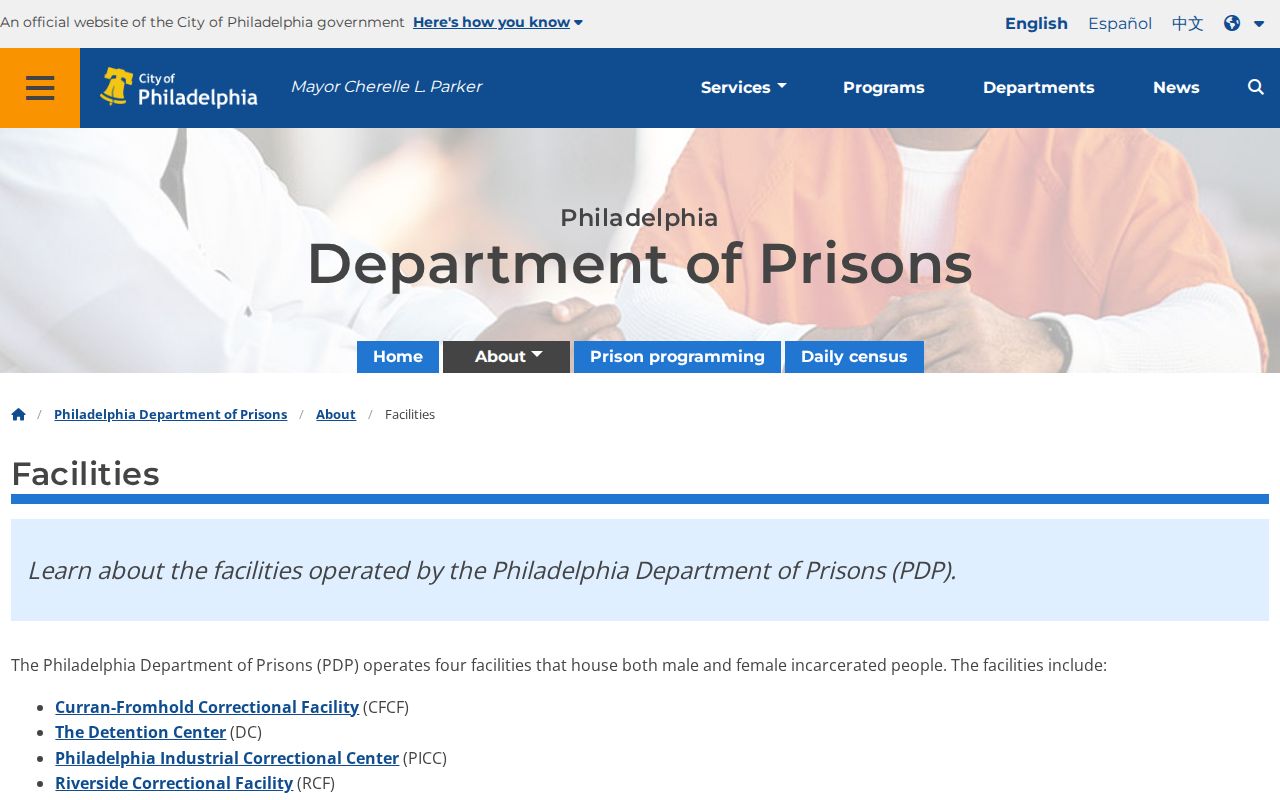
The shared facilities list shows why PICC placement must be read within the citywide PDP network.
PICC State Road Movements
CFCF, DC, PICC, and RCF are clustered along State Road. That makes a short physical move look more significant than it is. The citywide locator may replace PICC with another building after reassignment. Such a change is not discharge. Likewise, the daily census distinguishes people physically present, people temporarily away, and people held in another jurisdiction while PDP remains responsible.
| Later result | Meaning | Next source |
|---|---|---|
| CFCF, DC, or RCF | Internal PDP move | PDP locator or help line |
| PA DOC inmate record | State custody | State locator and docket |
| SAVIN out-of-custody event | Evidence of local release | Compare receiving systems |
| No online result | Unresolved | UJS and PDP record request |
Historic Philadelphia prisons should not be listed as active destinations. Nearby state institutions also are outside Philadelphia County. A state-sentenced person may be assigned anywhere Pennsylvania chooses, so the statewide locator is the correct route.
For pickup questions, contact PDP before travel. A published nighttime bail process names the SEPTA stop across from the campus and asks a pickup person to arrive no later than two hours after bail posts. That is an arrival direction, not a discharge deadline or a promise of a PICC-specific gate.
Read PICC Release Evidence
Each record has a boundary. The PDP locator answers current local placement. SAVIN reports participating-system custody events and can show an out-of-custody result. A UJS docket explains court authority but not the minute the person cleared PICC. PA DOC and BOP answer whether state or federal custody is involved. ICE ODLS addresses current civil immigration detention. The written PDP record supplies local commitment and discharge facts.
- Release
- Exit from confinement that may lead to the community, sometimes with supervision.
- Transfer
- Movement to another place or authority while custody continues.
- Parole
- Conditional release from confinement under continued supervision.
- Detainer
- A hold or request that may cause another authority to receive the person.
Strong verification uses at least two compatible sources. For example, a SAVIN release event plus a docket entry may establish why the person left, while the PDP record can settle exact time. A PA DOC hit points to transfer instead. Similar names require DOB, PID, DOC number, or docket checks before any conclusion.
PICC Release Timing
Release has several stages. A judge may issue an order, bail may post, a docket may update, staff may review holds, discharge paperwork may be completed, property may be returned, and physical exit may follow. A time shown by one stage should not be relabeled as another. Ask for the discharge timestamp when the question is when the person physically left PDP.
The City publishes no official named-person 24-hour or 72-hour release list for PICC. Its locator is designed for current custody, and its census is aggregate. Neither tool promises how long a former occupant remains visible. SAVIN is an event and notification service, not a permanent archive. UJS dockets and a focused PDP request are the more durable routes after a person leaves the live system.
If the legal order and custody status seem inconsistent, check other dockets and detainers. One case can permit release while another hold prevents it. The resulting conclusion should identify the source and time checked instead of stating more than the evidence supports.
Match identifiers before resolving a conflict. A PID ties the search to Philadelphia’s local record, while a docket number ties it to a court case. State and federal systems use their own identifiers. Dates also need labels, since an order date, SAVIN event time, and PDP discharge time can refer to different steps. Keeping those fields distinct produces a more precise PICC release finding.