
CFCF Release Destinations
Curran-Fromhold Correctional Facility is a local Philadelphia jail. It is not a Pennsylvania state correctional institution. Someone leaving CFCF may walk out after bail, release on recognizance, completion of a local sentence, dismissal, or another court-authorized discharge. Yet departure from this building can also mean movement to the Detention Center, PICC, Riverside, a hospital, another county, PA DOC, BOP or ICE. Only the first group is a return to the community.
The legal event and the physical exit are separate facts. A UJS public docket may show bail, disposition, sentence, or an order that removed one custody basis. It will not necessarily show the minute property was returned and the person cleared PDP. PA SAVIN can report a release or transfer event. A focused PDP commitment and discharge record can supply the strongest available answer about date, time, status, and destination.
Confirm a CFCF Release
Start with the official PDP locator instructions. The local search uses a full name with date of birth, or a Philadelphia police identification number. It is a current-placement tool, not a former-inmate archive. A CFCF result confirms current PDP placement. A miss is only a clue because spelling, processing, hospital status, a campus move, or outside custody may explain it.
Use a short verification sequence rather than treating one screen as final:
- Match the full name, date of birth, PID, docket number, and approximate booking date.
- Search the citywide PDP locator and note when the check was made.
- Check Pennsylvania VINELink for a matching custody event and location.
- Read the Philadelphia Municipal Court or Common Pleas docket for bail, disposition, sentence, and recent entries.
- If transfer is plausible, check PA DOC, BOP, or ICE before calling the person released.
- Request PDP discharge data when the exact physical exit matters.
If the web result is unclear, PDP lists 24-hour locator help at 215-685-8394, 215-685-8395, and 215-685-8396. Spanish assistance is listed at 215-685-8692. Ask whether the person is presently in a PDP-managed facility. The operator may not be able to provide a full historic record or interpret the court case.
For a broader released-person workflow, the Philadelphia County released-inmate search explains how local, state, federal, court, and notification sources fit together. Note: Record the system, result, and check time because custody can change after any online lookup.
CFCF Release Record Requests
The public locator does not promise an archive, release reason, or discharge timestamp. For those facts, direct a written Pennsylvania Right-to-Know Law request to the Philadelphia Department of Prisons open-records officer. Ask for records that already exist. A request for an explanation or a custom list does not require PDP to create a new record.
Philadelphia Department of Prisons RTKL
Gregory J. Vrato, Esq.
Agency Open Records Officer
7901 State Road
Philadelphia, PA 19136
215-685-7840
Greg.Vrato@prisons.phila.gov
Use the statewide Office of Open Records form and send one request per email. Include the requester’s name and email or physical address. Identify the person, date of birth, PID when known, CFCF, approximate commitment period, and docket number. Useful fields include admission date and time, facility assignments, discharge date and time, discharge type or status, destination, and releasable hold disposition. Ask for electronic copies and allow redaction of exempt material.
The Philadelphia Open Records Policy states that the City ordinarily provides a good-faith response within five business days, either final or interim. A statutory extension may run up to 30 calendar days. Fees follow the current Office of Open Records schedule, so verify the live schedule instead of assuming a fixed copy charge. Security, medical, juvenile, sealed, investigative, and other protected information may be withheld or redacted.
CFCF Custody and Contact
CFCF stands at 7901 State Road, Philadelphia, PA 19136. The official facility number is 215-685-7843. The Philadelphia Department of Prisons operates the jail. Its facilities description says CFCF opened in 1995 and is the largest of the current PDP facilities. Four custody buildings and an administrative building make up the complex.
Its size does not give CFCF a separate public roster. The same PDP locator serves all four adult facilities. The facility line can help with current navigation, but an exact historic release should go through the written records route. Do not expect gate staff to disclose protected information or resolve every legal hold. Court records and receiving-agency searches remain distinct parts of the verification process.
The official facilities screenshot below shows the source used for CFCF’s identity and facility facts.
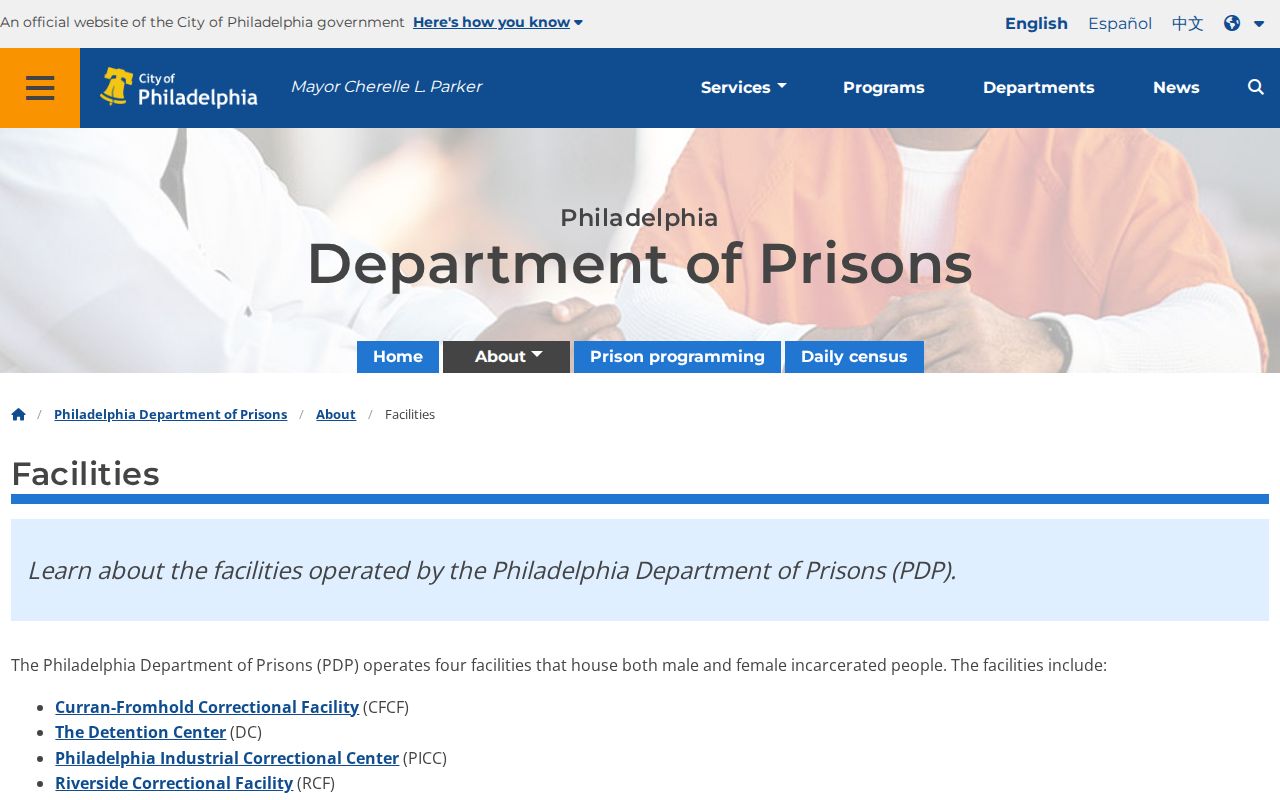
The citywide listing helps confirm that CFCF operates within one PDP network, which is why a building change cannot be read as discharge.
CFCF State Road Transfers
Philadelphia’s four adult prisons cluster on State Road. That local layout creates a search trap. A person can move from CFCF to DC, PICC, or RCF without leaving PDP responsibility. Daily census categories also separate people physically inside a building from workers, furloughs, hospital open-ward patients, emergency trips, and people held elsewhere while PDP remains responsible. Physical absence and legal discharge are not synonyms.
| Result after CFCF | What it means | Next check |
|---|---|---|
| Another PDP building | Internal placement, not community release | PDP locator and facility line |
| PA DOC result | State custody or supervision | State inmate or supervised-person mode |
| SAVIN out-of-custody event | Release evidence from a participating feed | Compare with docket and receiving systems |
| No PDP result | Unresolved absence | UJS, SAVIN, receiving systems, and PDP record |
Historic Philadelphia prisons should not be presented as active options. The official current list controls. Likewise, nearby state prisons are not Philadelphia County jails. Pennsylvania may assign a state-sentenced person anywhere in its statewide system.
CFCF Night Release Logistics
Philadelphia published a campus procedure for bail posted during nighttime hours. It says release processing begins when bail posts and permits the person to call the bail poster or a loved one to arrange transportation. The pickup person is instructed to reach the SEPTA bus stop across from the PDP campus no later than two hours after posting and then wait for physical release.
That instruction is not a promise that CFCF will release someone within two hours. A court order, bail payment, hold review, paperwork, property return, and physical exit occur in sequence. Another docket or detainer can also stop discharge. Because the City procedure dates to 2021, confirm current arrangements with PDP before travel and share pickup details only with the person handling transportation.
Facility-specific exit details can change. The published procedure refers to the PDP campus, not a guaranteed CFCF gate. If the person reports no transportation, the procedure describes referral to PDP transportation and transportation if accepted. That service detail helps plan a pickup, but it does not prove an individual has been released.
Read CFCF Release Evidence
Each source answers a different question. The PDP locator addresses present local placement. SAVIN reports a custody status or event from a participating system. The court docket explains the legal action behind bail, dismissal, sentence, or probation. PA DOC and BOP show whether another corrections system has the person. A discharge record addresses PDP’s own custody timeline.
- Discharge
- Exit from PDP custody, which may lead to the community or another authority.
- Transfer
- Movement to another facility or agency while custody continues.
- Detainer
- A request or hold that may allow another authority to take custody.
- Parole
- Conditional release from confinement while supervision continues.
No single no-hit proves community return. Strong confirmation usually combines a custody event or PDP record with the court or receiving-system result that explains it. That distinction protects against the most common CFCF error: treating a State Road move as a completed release.
Identity matching is part of that proof. Compare the DOB, PID, docket number, commitment dates, and any state or federal identifier instead of relying on a name alone. If one source is newer than another, state the update time and recheck the official system. A careful result can remain unresolved until PDP responds. That is more accurate than filling a gap with an assumed destination.