
Philadelphia USMS Custody Paths
The U.S. Marshals Service handles prisoners tied to federal court proceedings, including transport and detention arrangements. A person may enter USMS custody after a federal arrest, a federal court remand, or transfer from the Philadelphia Department of Prisons. USMS may place that person in a BOP facility or a contract holding site. The agency responsible for the case and the building that houses the person are not always the same.
Departure from one holding site can mean transport to court, transfer to another institution, designation to BOP after sentencing, release under a federal court order, or delivery to another authority. Physical movement is not enough to label someone released. The latest federal docket entry and confirmation from the holding institution provide the soundest public path.
Confirm Philadelphia USMS Release
Start with the federal case. The PACER Case Locator can lead to the docket containing arrest, detention, release, sentencing, warrant, and supervised-release proceedings. Search the correct person and district, then verify the case number and charges before reading a recent order. Similar names and multiple federal matters can produce a false match.
Use this sequence for a USMS release check:
- Gather the full legal name, date of birth, federal case number, court district, and any federal identifier.
- Review PACER for the latest detention, release, remand, sentencing, or warrant entry.
- Identify the current holding institution from an authorized court, agency, or counsel source.
- Contact that facility for current placement information that policy permits.
- Search BOP only if the person entered the BOP searchable system.
- Check ICE or another receiving agency when the record indicates a custodial handoff.
A court release order establishes legal authority, not the exact time the person walked out. Processing, transport, a second case, or a detainer can delay or redirect the exit. A sentencing entry can also shift a person from pretrial USMS responsibility into a BOP sentence without any community release.
The Philadelphia County released-inmate search helps separate PDP, state, federal, and immigration systems when the originating agency is unclear. Note: Record the docket update and facility-check time because an older order may not reflect present custody.
PACER USMS Release Records
PACER is the main public federal docket route, but it is not a custody roster. Useful entries include an initial appearance, detention hearing, commitment or remand order, bond conditions, release order, judgment, sentence, warrant, and supervised-release action. Read the document itself when available. A docket label alone may omit conditions or the effect of another pending matter.
| Docket event | What it can establish | What it cannot establish |
|---|---|---|
| Detention order | Federal authority to hold the person | Exact current building |
| Release order | Federal authorization and stated conditions | Physical exit time or other holds |
| Judgment and sentence | Term imposed by the federal court | BOP designation or final release calculation |
| Supervised-release entry | Post-confinement court supervision activity | Proof that no other custody exists |
The PACER Case Locator capture shows the source used to trace Philadelphia federal detention and release orders.
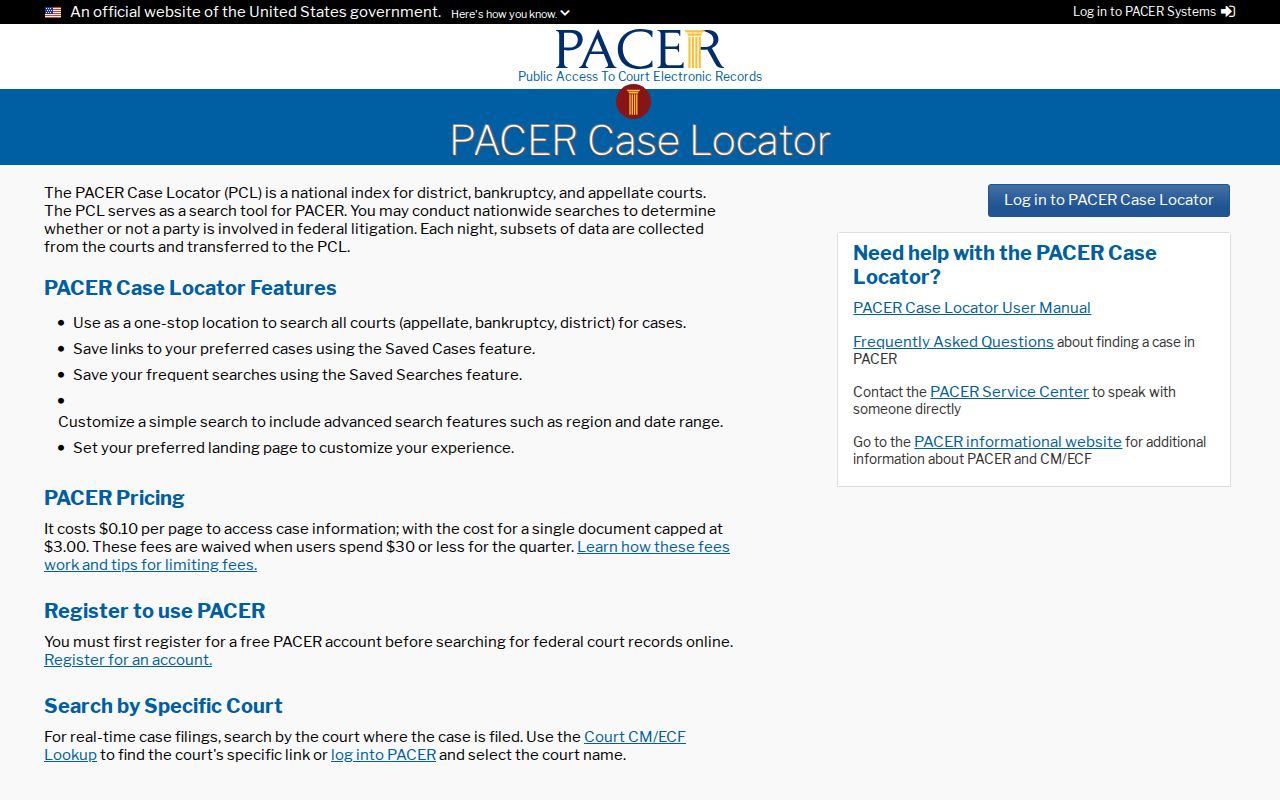
The docket gives a legal timeline. The holding institution remains the source for whether the person has physically left custody at a specific moment.
PACER registration and document access may carry current fees. If a listed document is unavailable electronically, follow the federal court clerk’s record-access instructions. Identify the case number and exact filing rather than asking for a broad account of the person’s history.
USMS Holding Facility Checks
USMS prisoners can be housed at BOP or contract locations. FDC Philadelphia is a federal detention center at 700 Arch Street and is used for federal court custody. Yet a Philadelphia federal case does not guarantee placement there. Transport needs, bed space, security classification, court schedules, and designation decisions can result in another holding site.
Federal holding-facility route
Confirm the institution through an authorized source
Use the institution’s official contact page
Provide the federal case or register number when known
Expect disclosure limits on individual movements
Ask a narrow question about present placement or whether the facility still holds the person. Staff may not disclose movement plans or protected details. If the facility says the person departed, request the receiving agency only when policy permits. A departure time by itself is not a release record because transport between secure locations may follow.
USMS policy does not provide public prisoner photographs, personal histories, or arrival and departure times. Its Justice Detainee Information System is access-controlled. Do not expect a public photo gallery, a movement schedule, or a former-detainee list. Court records and facility confirmation are the proper public channels.
BOP and USMS Release Status
The BOP Inmate Locator is useful only when a person entered BOP’s searchable records. Search by BOP register, DCDC, FBI, or INS number when known. A name search permits optional age, race, and sex filters. Results can list the register number, demographics, release date, and location.
A past date with “Released” supports departure from BOP custody. “Not in BOP Custody” means only that BOP does not currently hold the person. BOP expressly warns that another correctional or law-enforcement agency may have custody or that supervision may continue. Most important for a USMS search, failure to find a person in BOP is not proof of release.
The BOP locator capture illustrates the federal result fields and custody warnings that apply when a Philadelphia USMS prisoner has a searchable BOP record.
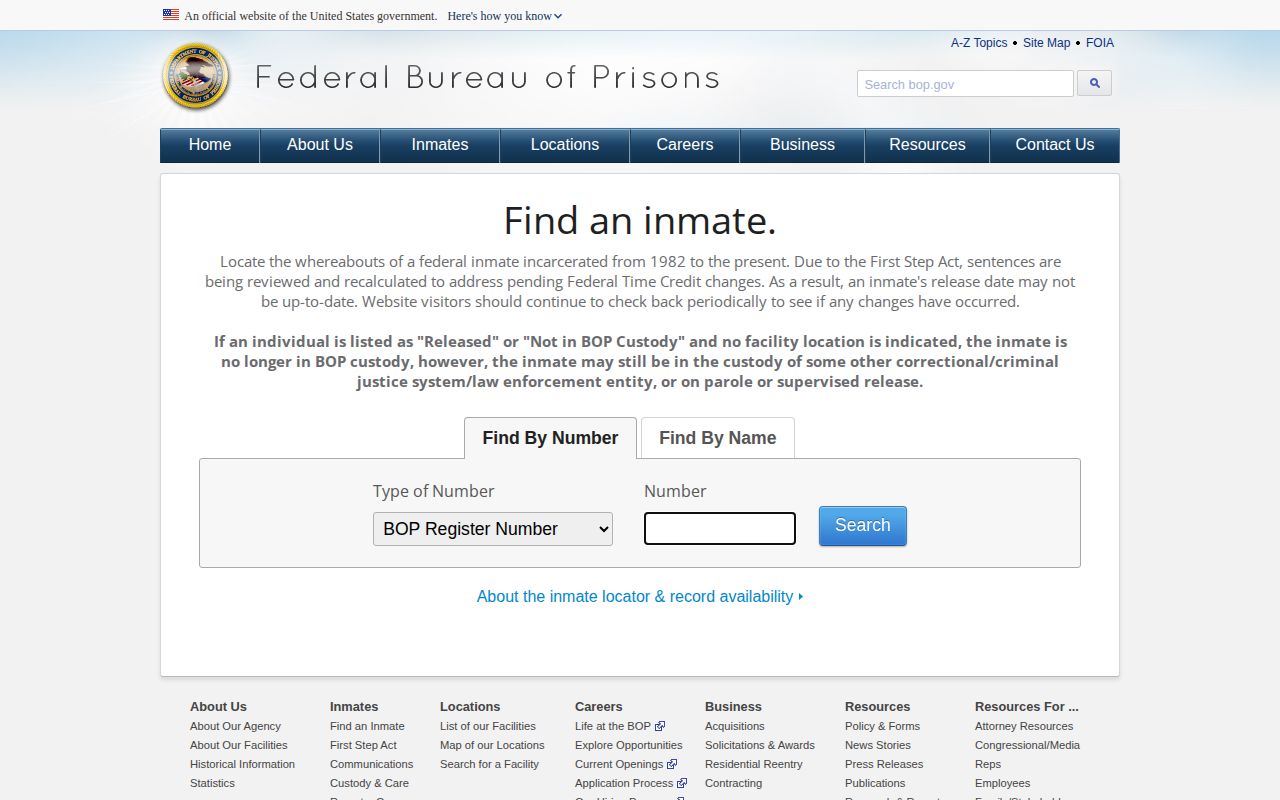
The BOP screen adds evidence only within BOP’s scope. PACER and the holding facility still control questions about court authority and physical USMS custody.
| Search outcome | Supported reading | Next step |
|---|---|---|
| Current BOP facility | Present searchable BOP custody | Verify court case and institution |
| BOP “Released” | Departure from BOP on the date shown | Check supervision and receiving agency |
| No BOP match | No resolved BOP record | Use PACER and holding facility |
| Future BOP date | Projected date subject to change | Recheck after actual processing |
Philadelphia USMS Custody Transfers
A Philadelphia detainee can cross several systems without being released. PDP may transfer a person to USMS after federal authority takes effect. USMS may move the person to FDC Philadelphia or another holding site. After sentence, BOP may designate a prison. At the end of criminal custody, ICE or another jurisdiction may accept the person. Each handoff needs its own record.
When a PDP locator result disappears, check the UJS docket for the local case and PACER for the federal case. A federal writ, detention order, or remand entry can explain why local placement ended. If BOP has a positive record, read its location and release date. If immigration custody is possible, use ICE ODLS separately. One system’s release label never settles another system’s status.
Keep the timeline in event order:
- Local discharge or transfer record from PDP.
- Federal court detention or remand authority in PACER.
- USMS transport and holding-facility placement.
- BOP designation or searchable custody when applicable.
- Community release, supervision, or another agency’s pickup.
This sequence distinguishes a release from one building, a release from one agency, and a return to the community. Those events may occur on different dates.
Evaluate USMS Release Evidence
No public USMS roster, photo archive, or departure schedule fills every gap. The best public finding may remain “unresolved” until the court or holding facility updates its record. That is a valid outcome. It is safer than treating the absence of a name as proof of freedom.
- Remand
- A court order placing or returning a person to custody.
- Holding facility
- The jail or institution that physically houses a person for USMS.
- Transfer
- Movement between facilities or agencies while custody continues.
- Supervised release
- Federal court supervision in the community after confinement.
Strong confirmation uses the correct identity, the newest PACER order, the present holding institution, and BOP only when searchable. If another authority takes custody, add that agency’s result. State both the scope and date of each record so a later reader can tell whether “released” means BOP departure, USMS case release, or actual return to the community.
Federal identifiers should stay tied to their source. A PACER case number identifies the court matter. A BOP register number identifies a searchable prison record. A local PID belongs to Philadelphia records, while an A-number belongs to immigration records. One person can have several of these numbers. Cross-checking them through official documents is more reliable than forcing a name-only result to fit the expected timeline.
When the latest docket orders release but the facility cannot yet confirm departure, report the order and the unresolved physical status separately. The same care applies after sentencing. A judgment may authorize BOP confinement, but the later designation and transport can take time. These distinctions preserve the difference between legal authority, agency responsibility, physical location, and final return to the community.