
Philadelphia Projected Release Date Limits
The Pennsylvania public DOC locator does not display a field called “Projected Release Date” or “Tentative Release Date.” It also does not publish minimum or maximum sentence dates. Its Department Supervised Individual record can show a historical release date for someone currently under DOC supervision, but that is evidence of release already completed, not a future prediction.
The PDP incarcerated-person locator likewise does not promise a projected discharge date for a Philadelphia County detainee. Pretrial custody depends on court orders, bail, other dockets, and holds. A county sentence also may involve credit and administrative calculation. No online number should be invented by adding a sentence length to a booking date.
Find a Philadelphia Release Date
Use the custody system and sentence type to select the record. Begin with exact identity details, the court docket, and any PID or DOC number. The UJS Case Information portal can identify sentence terms and credit-related entries for Philadelphia Municipal Court or Common Pleas matters. The actual sentencing order may need to be obtained from the filing court.
- Confirm whether the person is pretrial, serving a Philadelphia county sentence, or serving a Pennsylvania state sentence.
- Retrieve the docket and sentencing order, then label the imposed minimum, maximum, probation, and credit entries.
- For a county case, ask PDP and the court for current commitment and calculation information.
- For a state case, ask PA DOC sentence-computation or records staff for the official current calculation.
- Check whether RRRI was imposed and later certified, then obtain the final Board Action if parole is involved.
- Confirm completed release through a supervised-person release date, SAVIN event, or agency separation record.
This sequence avoids treating eligibility as release. For a full named-person custody check across systems, use the Philadelphia County released-inmate search before calculating from an uncertain record.
Note: Preserve the label and source for every Philadelphia County date so eligibility and physical discharge remain distinct.
Philadelphia Minimum and Maximum Sentences
Pennsylvania uses indeterminate sentencing, which commonly states a minimum and maximum. Under 42 Pa.C.S. § 9756, the court-imposed minimum generally may not exceed one-half of the maximum. The minimum generally cannot be reduced through parole except where another law permits it. Under 61 Pa.C.S. § 6137, the Parole Board generally cannot grant discretionary parole before the minimum expires.
The minimum is a parole eligibility threshold. It is not a promised street-release day. The maximum is the judicial term's outer point absent lawful changes, but sentence aggregation, credit disputes, violations, and recommitment can affect the agency calculation. A Board grant can also depend on release-plan approval, conditions, and detainers. “Grant to detainer” means custody continues with another authority.
- Minimum date
- The ordinary point when discretionary parole may become legally available.
- Maximum date
- The endpoint of the judicial term as officially calculated, subject to lawful change.
- Board Action
- The written parole decision, conditions, and any detainer result.
- Actual release
- The completed physical departure recorded by the responsible agency.
Philadelphia Rejects the 85-Percent Rule
Pennsylvania does not apply a general rule that every state inmate must serve 85 percent of the maximum sentence before parole. The Pennsylvania Parole Board process says so expressly. The ordinary structure turns on the judicial minimum and maximum, statutory eligibility, and a discretionary Board decision. No universal day-for-day good-time deduction was verified for every Pennsylvania state sentence.
The official parole-process image preserves this important limit:
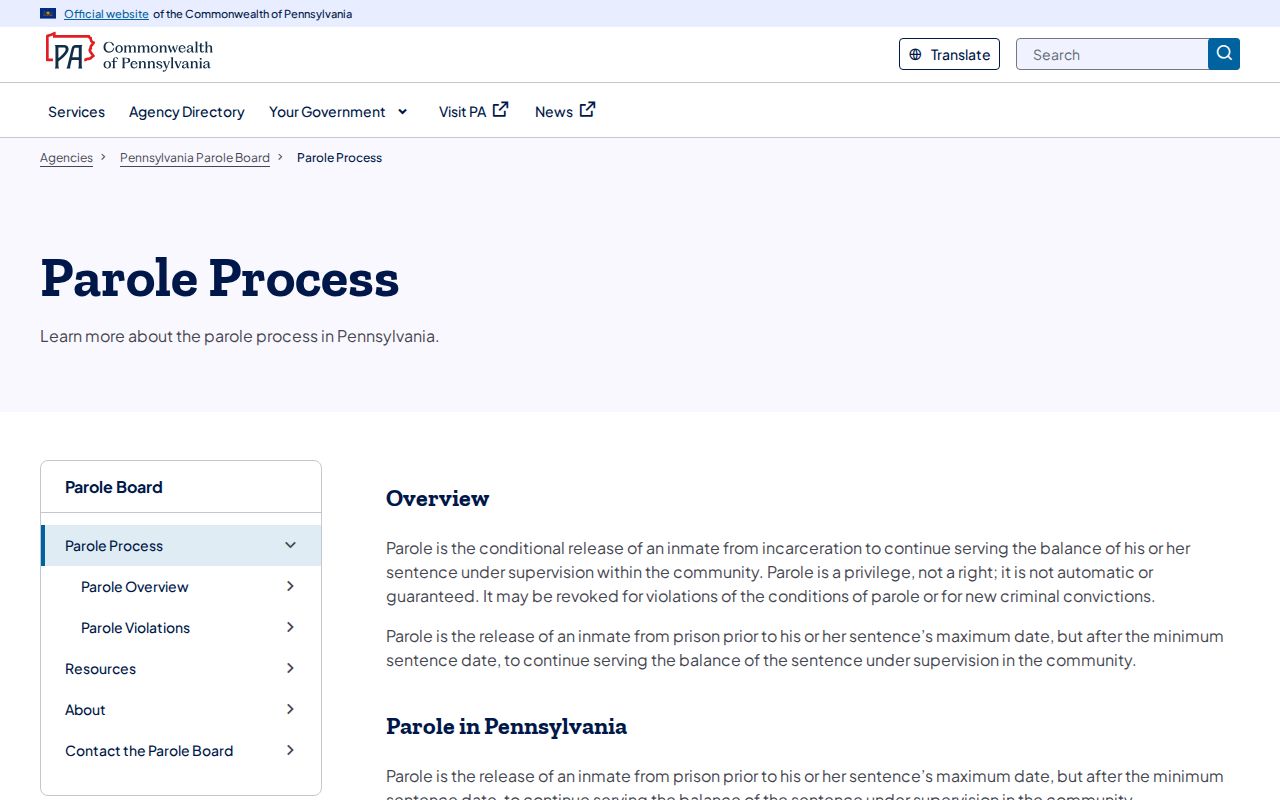
Program completion and conduct may affect parole readiness, while special statutes can create defined eligibility routes. Neither produces an automatic release date without the required findings and agency action.
Note: Do not estimate a Philadelphia state release by multiplying the maximum sentence by eighty-five percent.
Philadelphia RRRI Release Date Rules
The Recidivism Risk Reduction Incentive, or RRRI, is a specific statutory program in 61 Pa.C.S. Chapter 45. It is not blanket good time. Under § 4505, an eligible person's RRRI minimum is three-fourths of the regular minimum when that minimum is three years or less, or five-sixths when it exceeds three years. The date is rounded and may be recalculated when sentences are aggregated. These fractions apply to the minimum, not the maximum.
Eligibility and certification control. The sentencing court determines statutory eligibility and imposes the regular and RRRI minimum where applicable. PA DOC then assesses the person and sets a program plan. Successful adjustment, good conduct, program completion, an adequate reentry plan, continued eligibility, notice, and a public-safety decision are among the statutory conditions. Arrival at an RRRI minimum creates no absolute right to parole.
The PA DOC RRRI source should be read with current 61 Pa.C.S. §§ 4503 through 4506. Exclusions are detailed and can change. A docket or sentencing order should show whether RRRI was imposed for the specific Philadelphia County sentence.
Philadelphia Release Dates That Change
A sound projection is conditional because several legal and administrative events can alter what happens next. The table identifies which source should resolve each change instead of assigning every question to the public locator.
| Factor | Possible effect | Best source |
|---|---|---|
| Sentence credit or aggregation | Changes the official minimum or maximum calculation | Sentencing order and PA DOC sentence computation |
| Parole refusal or later review | Leaves confinement in place beyond the minimum | Final Board Action |
| Parole grant conditions | Delays physical release until conditions and planning are complete | Board Action and PA DOC |
| Detainer or another docket | Moves the person into continued custody elsewhere | Court, holding agency, and receiving-system record |
| Violation or recommitment | Changes custody and sentence administration | Board or court action and agency calculation |
| RRRI certification | May create a special eligibility point if all rules are met | Sentencing order and DOC certification |
A scheduled court event can matter without being a release date. Likewise, a parole interview or review month does not show that parole was granted. Use the precise legal record and later agency event.
Philadelphia County Jail Date Questions
A pretrial PDP detainee ordinarily has no sentence-based projected release date. Bail may allow release if posted and if no other valid hold blocks discharge. Dismissal or a release order can remove one custody basis, but another docket or detainer may remain. The PDP locator shows present placement, not a future exit.
For a short Philadelphia county sentence, retrieve the sentence and credit entries, then ask the court or PDP for the controlling calculation. The public docket can show the judicial act but does not account for each administrative step or the minute of exit. Ask for existing commitment and discharge data when the physical release date matters.
The First Judicial District portal leads to Philadelphia court records and offices:

The correct court order is stronger than a date inferred from a current PDP locator entry.
Philadelphia State Release Date Records
The PA DOC locator separates current inmate records from Department Supervised Individual records. Current inmate details can identify state jurisdiction and placement, but the public fields do not include projected, tentative, minimum, or maximum dates. A supervised-person detail may show a release date after institutional release into parole. It may not preserve a fully discharged person forever.
The PA DOC custody-status update service describes VINE notices for transfer, release, escape, and recapture:
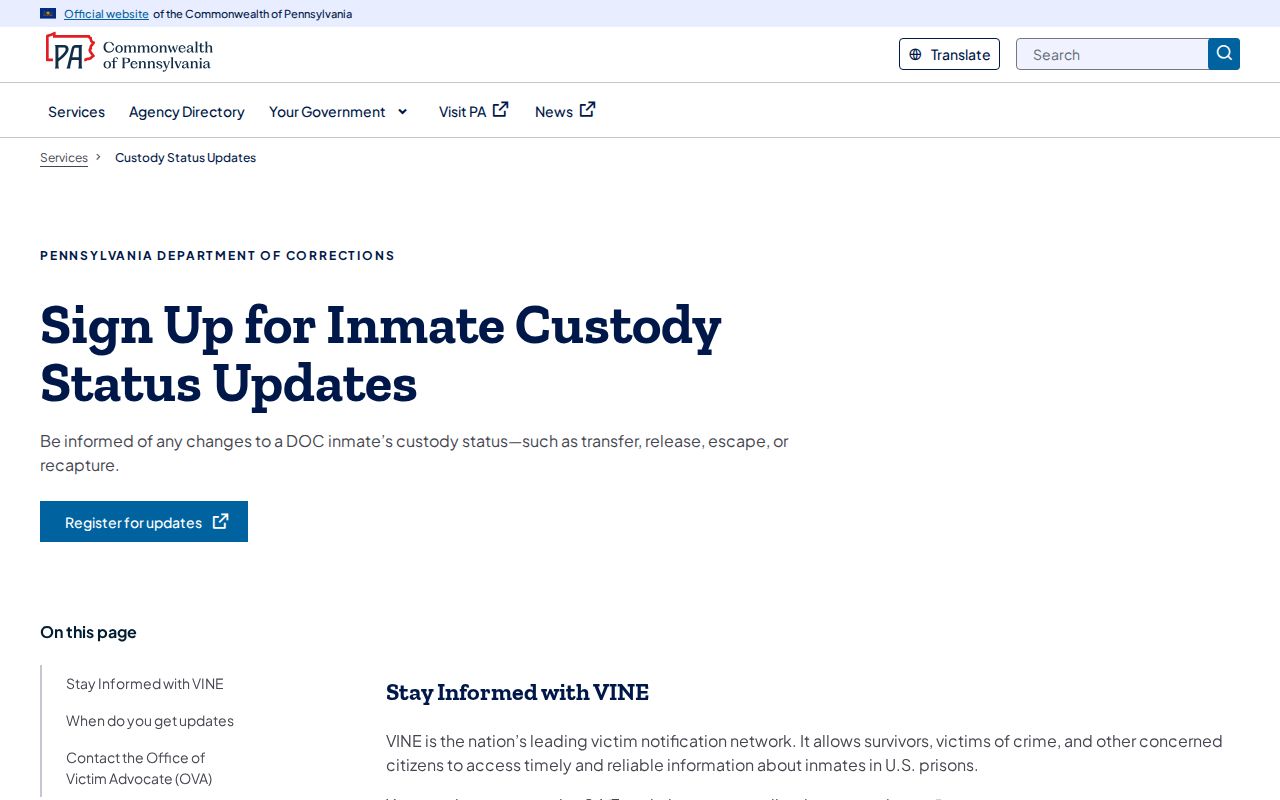
An alert can confirm a reported event, but it does not replace the official sentence calculation. The final Board Action explains a grant, refusal, conditions, or detainer outcome. For exact records, identify the DOC number, institution, date type, and requested document.
Note: A supervised-person release date is historical evidence, while a minimum date is only an eligibility point.
Philadelphia Parole Decision Timing
The Pennsylvania Parole Board does not provide a verified public person-level future interview calendar or online individual results search. Monthly statistics are aggregate. A listed interview or review period does not create a right to release. The Board considers statutory factors under 61 Pa.C.S. § 6135, and ordinary parole remains discretionary.
Request the final Board Action by name, DOC or parole number, and approximate action date when the outcome matters. A grant can still require an approved plan and resolution of holds. A refusal can state later-review requirements. Revocation and reparole decisions use their own procedures and dates. Each should be reported with the wording in the action.
Confirm a Philadelphia Actual Release
A projection stops being a projection only when the responsible system records the event. For PDP, obtain the discharge date and time if precision is needed. For state parole, compare the Board Action with the supervised-person release date and a PA SAVIN or agency record. For a federal case, BOP's future dates are projections that may change through sentence recalculation.
PA SAVIN can send a Philadelphia County or state release alert, transfer alert, or custody update. Registration and interpretation steps appear on the Philadelphia County VINELink inmate check. Use the alert with the court and agency record, especially when another authority may have accepted custody.
Philadelphia Short-Sentence Release Dates
Section 6137.1 supplies a separate short-sentence parole process for defined PA DOC commitments whose aggregate minimum, or shorter RRRI minimum, is two years or less. Statutory disqualifiers, personal-injury-crime rules, and public-safety authority still apply. The process should not be summarized as automatic release at the minimum date.
First verify that the case is a state DOC commitment rather than a PDP county sentence. Use the sentencing order and official computation to identify the aggregate minimum. Check whether RRRI was imposed, whether an exclusion applies, and what Board or DOC action followed. A person can meet a date threshold yet remain confined because the process, plan, detainer, or safety decision has not produced physical release.
The label must stay exact. A short-sentence eligibility date is not an actual Philadelphia County release date. Confirmation comes later through the supervised-person release field, PA SAVIN event, or agency separation record.
Philadelphia Federal Projected Release Dates
A federal BOP result belongs to a different sentencing system. The BOP locator can display a future date, but BOP describes it as a projection that may change through sentence recalculation, including federal time-credit review. “UNKNOWN” means the release term is undetermined. A past date with no facility or a “Released” location indicates departure from BOP custody, while “Not in BOP Custody” does not rule out another authority or supervision.
Do not apply Pennsylvania minimum, maximum, RRRI, or Parole Board rules to a federal date. Use the federal judgment and BOP record together. FDC Philadelphia is a federal detention center, not part of PDP or PA DOC, and a federal pretrial detainee may have no sentence-based projected release date.